Sunday, December 20, 2015
TOW #13 - The Case of the Vanishing Blonde
"From the start, it was a bad case." These are the words Mark Bowden uses to begin his chilling tale of a Florida crime case cracked open. While the first sentence may seem dramatic, much of Bowden's essay is written in this way. Through short statements and surprising truths, Bowden tells the story of a woman found raped and beaten on the edge of the Everglades, and how two men turned the case from a dead end, into the surprisingly complex outcome it became. Bowden begins with a general telling of what happened. The woman only remembered pieces from that night, but immediately hired a lawyer and sued the hotel she had been staying at for negligence. Upon hitting this point in his telling, Bowden switches to giving background information about the private investigator that was hired to find the facts of the case. Through quotes such as "I'll find out what happened. I'm not going to shade things to assist your client, but I will find out what the truth is", Bowden reveals the contrasting agendas that each person involved in the case had. In addition, by switching from telling the story, to giving background about the main players, to quoting these players, Bowden is able to build tension to the eventual climax of his story, and allow the reader to form opinions and inferences about his topic. Another effective tool Bowden uses is to lay out the evidence in the same order that the detectives in the case found it. He doesn't give all the answers first, and then explain how they realistically arrived at those answers, and instead leaves the reader guessing and wondering. In this way, Bowden is able to bring his audience in as a part of the case, and by the end, the readers feels as if they have solved it themselves. Not only is the case Bowden describes an interesting one, but he intricately weaves the tale in a way that forces the reader to want to keep reading. He also subtly includes the doubts he has about the victim's tale, an idea that becomes increasingly important. By only subtly including his biases, the reader almost believes they came to these conclusions alone, and that they have been a small factor in solving the case. Bowden plays to his audience's emotions and assumptions, and is very effective in making this real life crime feel almost as though it could have been created for the big screen.

Saturday, December 12, 2015
TOW #12 - Can light therapy treat non-seasonal depression too?
In places all over the world, the winter months are cold, dark, and pretty darn depressing. For a select few, these months are more than just a nuisance. They are a trigger for seasonal affective disorder (SAD), a type of depression that is related to changes in the seasons. A typical way of treating SAD is with light therapy, in order to simulate some of the same conditions of the lighter months. A recent study has found that light therapy can be useful in treating all kinds of depression, no longer just SAD. In the essay, Can Light Therapy Treat Non-Seasonal Depression too?, the author works to enlighten her audience about a recent advancement that has been made using a familiar treatment tool. As would probably be obvious from a more scientific article, the author, Carina Storrs, relies mainly on her use of statistics and quotes to back up the points she makes. In a study done to test the effects of a light box, it was found that "among the 32 patients who did light therapy alone and the 29 who had a combination of light therapy and Prozac, 44% and 59% experienced remission after eight weeks, meaning that their depression symptoms all but went away." By supporting her idea with facts straight from a study, Storrs is able to cement her point for the audience. Many times throughout the article, Storrs uses quotes from professors who study all types of depression, as well as the leaders of the study she sites. In doing this, Storrs becomes more trustworthy, and her information is backed up with fact. Another interesting strategy Storr uses is having a short compilation of photos from all over the world. The photos show all of the various ways that people have been utilizing light therapy, aside from treating SAD. Therefore, the idea that light therapy can be a useful tool for a variety of reasons is implanted in the reader's head from the minute they begin to read the article. Overall, Storrs was very effective in relating her information concerning the treatment of depression, not just SAD, using light therapy. Her article had a highly positive tone and forced the reader to become optimistic about the advancements being made in the treatment of depression.
Sunday, December 6, 2015
TOW #11 - Eat, Pray, Love (First Half)
The Italian have a saying that goes: l'arte d'arrangiarsi - the art of making something out of nothing. In her story, Eat, Pray, Love, Elizabeth Gilbert was able to discover this art for herself. After a horrible divorce and several bouts of severe depression and heartbreak, Gilbert set out for a trip to Italy, India, and Indonesia. In Italy she hoped to rediscover passion and pleasure, in India, devotion and prayer, and finally in Indonesia, the happy medium between the two. The story follows Gilbert's own journey of healing, and the pilgrimage she took to rediscover herself. Through her use of fitting dialect and juxtaposition between the two sides of herself, Gilbert reveals the hardships, as well as triumphs, that she experienced during her year of rediscovery. The first half of the book follows Gilbert through her journey in Italy. Here, she sets out to learn the beautiful language of Italian as well as eat the most luxurious and delicious food she can imagine. Throughout her telling of this little part of her travels, Gilbert uses much Italian to convey the emotions she feels. Many of her anecdotes begin with an Italian word she learned that day, and many of the revelations she makes about herself and her life come from Italian words and phrases. In her beginning days in Italy, Gilbert starts to discover little gardens and hidden places all over the city of Rome. One day, she buys a poetry book with English on one side and Italian on the other. After discovering a wonderfully hidden garden with a small fountain in the middle, Gilbert opens the book she bought and reads a line. "Dal centro della mia vita venne una grande fontana...From the center of my life, there came a great fountain" (39). Not only is this moment chill inducing, it includes the actual language that Gilbert fell in love with during her journey, and brings the reader even closer to the experiences she had. Gilbert also is able to juxtapose the two sides of herself that are shown throughout the story. On the one hand, she is a confident, smart, loving, funny 30-something with a great life. On the other hand though, Gilbert is depressed, clingy, stubborn, insecure and lonely. Throughout her anecdotes, the author is also able to weave the opposing tales of her two sides into everything she does. When her depression makes an appearance, she doesn't shy away from it and instead addresses the issue with her audience. In this way, Gilbert is a very open and relatable author, and the triumphs and revelations she makes throughout the story become all the more important to her readers.
Sunday, November 22, 2015
TOW #10 - The Situation Room
Movies have been created, books have been written, and articles have been shared, all stemming from the same night in American history, the night terrorist leader Osama bin Laden was killed by US Navy SEALS. The photograph was taken by White House photographer Pete Souza in the intense moments during the raid on the home of bin Laden. The photograph serves to reveal the focus and intent with which the mission was carried out, and how, even from thousands of miles away, the hearts of everyone involved were beating. An interesting aspect of the photo is how the main subject is not even included in the frame. All of the people in the scene are gazing intently at some unknown object, presumably a screen with updates from the mission. While it's almost annoying to the reader that this object of interest is unknown, it makes for even more mystery and excitement. Obviously the moment was very intense, and by choosing to focus on the reactions of those involved, instead of the object of intensity, Souza was able to capture the true feelings from the moment. In addition, the photograph alludes to information that is already known by the audience. It is known that the raid was carried out in the middle of the night (in Pakistan), but because of the time difference it was only around five or six PM in Washington. Therefore, while the rest of the city, and the country, was making dinner and getting ready for their night, this group of people sat in the situation room and watched one of the most important moments in US history. Information that is also alluded to is what exactly the President and his team are watching, presumably the very moments when bin Laden was killed, as well as the updates that followed. Another aspect of the picture that is interesting is the faces that are present in the room. Among the most noticeable are President Barack Obama, Vice President Joe Biden, and Secretary of State Hilary Clinton. The viewer identifies these faces and can discern how important of a moment it must have been for all three of these leaders to be in the same room at once. Finally, the fact that the photo takes place in the Situation Room of the White House, with a long history of militarily important moments, helps the reader to understand the intensity of the moment.
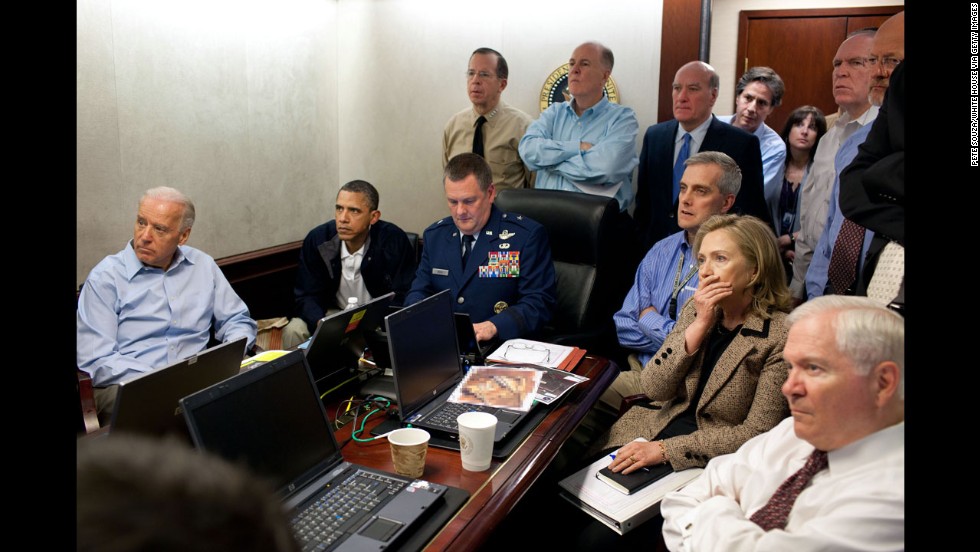
Photograph by Pete Souza
Sunday, November 15, 2015
TOW #9 - Remarks by the President in Eulogy for the Honorable Reverend Clementa Pinckney
On the night of June 17, 2015, a man opened fire at a historic black church in Charleston, South Carolina. The attack killed nine, and brought once again the terror of gun violence to the front of the hearts and minds of the American people. In his eulogy for slain Reverend Clementa Pinckney, Barack Obama paid tribute to the victims of the attack, and also purposefully tugged at the emotions of all those American citizens whom he knew were listening. The nation was listening closely to President Obama's carefully crafted words, and they absolutely paid off in the end. In his eulogy, President Obama utilizes first person plural pronouns. By using sentences such as, "To the families of the fallen, the nation shares in your grief. Our pain cuts that much deeper because it happened in a church", Obama is able to reveal to his immediate audience of those directly affected by the tragedy that the nation stands behind them. His use of first person plural pronouns does not place the tragedy in his hands or the hands of those in the church, it places the tragedy in the arms of the nation as a whole. Obama's use of first person plural pronouns also serves to challenge the nation in saying that gun violence is an issue that effects every single person, and we must make a change. In his eulogy, Obama also tugs at the heartstrings of his entire audience when he pauses in his speech and then breaks into a solo singing of Amazing Grace. The well-known song forced the entire room into emotional tears and, in the video of the event, shows the room break into a standing applause. By deviating from the expected in his speech, the President showed off a different side than the more formal one that is usually exposed to the public. He was able to honor the victims of such a terrible attack, challenge the nation to tighten their control on gun violence, and bring out a different side to himself than is normally seen. Overall, the President achieved his purpose to the fullest extent.
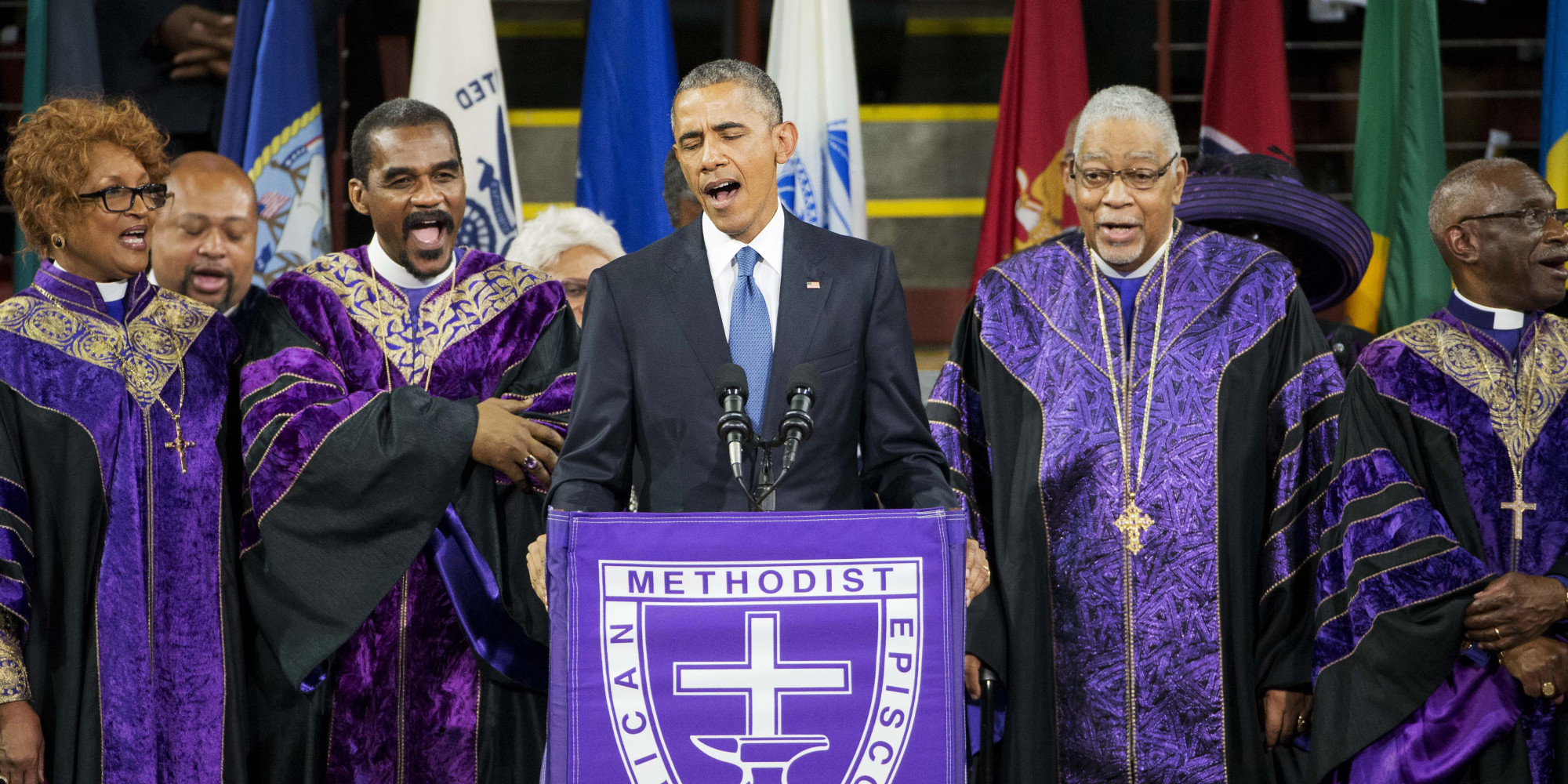
The President breaking into song
Tuesday, November 10, 2015
IRB Intro #2
I have chosen to read Eat, Pray, Love by Elizabeth Gilbert. I chose this book because of the different style of writing it will implore as well as the adventurous and narrative tale Gilbert provides. I am looking forward to reading this book for its more "novel-like" rhetoric and less autobiographical nature compared to my last book.
Thursday, October 29, 2015
TOW #8 - Cash
The autobiography of Johnny Cash, Cash, was written by the famous singer, guitarist and songwriter whose work spans many generations. The author is credible simply because he is writing about his own life and the events that occurred. The audience for whom the book is written for would definitely be those who are at least slightly familiar with Cash's work. Often he alludes to events that occurred in his life in relation to his music. While someone who is unfamiliar with Cash's work could still enjoy his anecdotes, a familiarity with his music helps the reader to understand how important Cash's life experiences were. The purpose in Cash writing his autobiography is for his fans to understand the hardships he endured throughout his life, and to reveal how these hardships paved the way for not only his music, but for the eventual happy times he had the privilege of experiencing. Throughout the second half of the book, Cash uses a variety of sentence structures. For example, after a long winded description of a fellow singer and a show they did together, Cash ends with a simple comment, "That's fun" (383). This abrupt change from the carefully crafted and intricate sentence that Cash used prior is not only a break for the reader, it also helps to establish his tone. The short sentence shows his outlook in a simple way, and shows how objectively Cash can look back on all the emotional and life changing moments he experienced. Multiple times Cash ends paragraphs with short sentences, providing a sometimes abrupt, but effective ending to his anecdotes. Another strategy Cash uses is repetition of ideas. In the first half of the book, he refers to the fact that his outfit for almost every show he has ever done has been completely black, and he even has a song called "Man in Black". Near the end of the book, Cash references this idea once again when he writes, "I'll put on my black shirt, buckle up the black belt on my black pants, tie my black shoes, pick up my black guitar, and go put on a show for the people in this town" (395). Not only does this sentence repeat the idea of "black" once again, it also helps to characterize Cash and the emotions he feels. Black represents a dark color, and Cash seems to repeat the idea to show how he can relate to the emotions that are evoked by its darkness. Overall, Cash was very effective in writing his book. The stories he told were interesting, thought-provoking, and helped to characterize Cash in a new light. Not only was he just the extremely talented songwriter, singer and guitarist, he was also a man who had to endure many hardships, but was able to come out stronger on the other side.
Sunday, October 25, 2015
TOW #7 - Justice Ginsburg’s Cautious Radicalism
The article was written for The New York Times by Irin Carmon, an Israeli-American journalist and commentator as well as co-author of the new book, Notorious RBG: The Life and Times of Ruth Bader Ginsburg. The article focuses on the strategies of RBG and how these strategies, as well as her fame, have developed over her lifetime. The article is written to reveal a fighting side to RBG in the face of discrimination and injustice. Written for an audience of educated people, likely many women, the article discusses RBG's recent fame with younger generations, but only alludes to her professional work. A strategy Carmon uses is many quotes to characterize the Supreme Court Justice. While many are familiar with the professional side of RBG, as well as the public opinion side, Carmon uses her piece to reveal even more about RBG than is generally viewed. An example is when she juxtaposes the public opinion of RBG with the "real" RBG. She writes, "Justice Ginsburg has been depicted as an avenging angel smiting her enemies, with two middle fingers up in the air, and as a warrior Athena inked on the arm of more than one feminist." Only one paragraph later though, Carmon uses a quote from RBG. She says, "Anger, resentment, envy and self-pity are wasteful reactions...They greatly drain one's time. They sap energy better devoted to productive endeavors." The direct quote not only helps to characterize RBG for Carmon's audience, it also juxtaposes the general public's view of the icon vs. the actual opinions of the icon herself. The end of the essay also provides a call to action for the audience, but in an indirect way. Carmon writes, "By that point, you can be sure she will have tried everything else. She'll still be fighting for the things she cares about. But this time, she'll be asking us to join her." Throughout the entire essay, Carmon dismantled certain views of RBG that most people look up to her for, mainly her extreme emotions and iconic feminism. However, by the end it is clear that Carmon agrees with RBG being an icon, but for different reasons. The author succeeded in characterizing RBG as an icon for even better reasons than before, achieving her purpose and calling for her audience to join RBG's fight for justice.
Sunday, October 18, 2015
TOW #6 - Human 'Mini Brains' Grown in Labs May Help Solve Cancer, Autism, Alzheimer's
The article was written by Thom Patterson who is a senior correspondent at CNN, specializing in technology, transportation, and aviation. Patterson wrote the article to highlight a leap forward that has been made in the science world. Recently, scientists have been able to grow brains that are nearly 98% similar to the brain of a fetus. Cells are taken from organisms and then grown in petri dishes into tiny replicas of human brains. The excitement comes from the fact that these brains will now be used to test drugs for everything from Parkinson's to Alzheimer's to schizophrenia. The brains, since unattached to human bodies, are an excellent testing ground for advancements in cures for previously incurable diseases. Patterson wrote the article for an immediate audience of doctors and researchers to learn about advancements that are being made in their fields. However, there is a broader audience of almost anyone who has some knowledge of diseases such as Parkinson's and Alzheimer's, and the article is written in fairly easy-to-understand terms for this reason. Patterson does a very good job of using logos to support his point. The first sentence of the article reads, "A Harvard medical pioneer calls it "astounding"-an "incredible achievement" and a "quantum leap forward" in the battle against cancer, autism, Parkinson's and Alzheimer's." These quotes establish the credibility of the topic from an outside source, and help Patterson to reenforce the excitement and importance of the advancements that have been made. In addition, Patterson also used quotes from Sanjay Gupta, an Emmy-Award winning neurosurgeon and correspondent for CNN. The organization of Patterson's article also helps his purpose. After describing the experiment and the possible advancements that could be made in the future using the lab-grown brains, Patterson heads his paragraphs with questions (which he describes as head-scratching, some good diction), and then proceeds to answer the question he has just posed. By taking the time to answer questions that he assumes his audience will be asking, Patterson is establishing ethos and illustrating in even more detail the importance of the breakthrough. His excitement towards the subject is evident, and he is able to achieve his purpose very well. The reader leaves with a knowledge of the subject and a desire to follow the brains through their coming trials.
Saturday, October 10, 2015
TOW #5 - Extra Gum Commercial: The Story of Sarah & J
The commercial was created through the Wrigley Jr. Company to promote their gum line "Extra". Currently, the story of "Sarah and Juan" has over a million views on YouTube and has been shared countless times on every social media network. The purpose for this commercial would be to first off, sell gum, but on a deeper level, the creators want the audience to connect with the characters and find a piece of themselves within the story. The emotional nature of the story is used to draw the audience in and associate the wonderful love story created with the brand of gum. The commercial follows a young couple from the first time they meet in high school all the way to the point of proposal many years later. In each scene, from dates to prom to fights, the Extra wrappers are incorporated into the scene. In the end (spoiler alert), Juan proposes to Sarah at a little art studio. As she walks in, all along the wall are pictures he has drawn on Extra wrappers of times they spent together. The last one on the wall is a drawing off a proposal, and Sarah turns around to find him down on one knee. The audience would definitely be younger people because they could relate to the characters, the difficulties the characters have, and the love story that is woven through the entire commercial. The biggest rhetorical device that was used was definitely pathos, and all the other devices used relate back to this one. The music is "Can't Help Falling in Love" sung by Haley Reinhart, and the raspy soul of her voice is tear inducing and highly effective. In addition, the creators used a narrative tone to follow the story. There are no words, other than the song, yet by the end the actors/producers have done such a good job of showing Sarah and Juan's story that the viewer feels as though they were in the story itself. Another rhetorical device that was used was repetition. In each scene, the gum wrappers make an appearance. This repetition subtly brings the product in, and also helps to create a connection between the story and the product itself. Over all, the creators definitely achieved their purpose. The commercial was interesting, inviting, well made, sad, happy, and many, many other positive adjectives.
Saturday, October 3, 2015
TOW #4 - Cash
The autobiography of Johnny Cash, Cash, was written (obviously) by the famous singer, guitarist and songwriter whose work spans many generations. The author is credible simply because he is writing about his own life and the events that occurred. The initial audience of the book would definitely be people who are familiar with Cash's work, and he alludes many times to performances he did and albums he released. However a second, and wider, audience also exists because even if one is not familiar with all the details of Cash's life, they can still enjoy the anecdotes he provides and the emotional appeal that his stories have. Cash's wrote his second autobiography to provide an outlook on his entire life as he got older and to reveal to his audience the hardships and experiences that shaped his music and his being. Throughout the first half of the book, Cash has used multiple rhetorical devices. In the beginning, Cash uses anaphora to establish a basis of his life and reasons for writing the book. On page 12 he uses the phrase "I'm thankful" to begin multiple sentences. This repetition goes back to his purpose of being able to look back on his life and reveal to the audience how he has come to be where he is. Another tool Cash uses is figurative language. On page 17 he writes, "Perhaps I'm just alienated, feeling the cold wind of exclusion blowing my way." This language allows the reader to get into the author's mind and understand the feelings he was experiencing at different points throughout his life. Another tool Cash uses is the way he jumps from flashbacks in his life to the current time, and sometimes even the day he is writing that page of the book. An example of this strategy comes on page 161. After telling an entire anecdote about his friend Waylon from a time when Cash was on tour, he starts the next page by writing, "We're edging into the heart of winter now, and I'm in Texas." This rotating perspective allows the reader to understand events that took place in Cash's life and then connect them back to the current Cash that narrates the story. He is extremely effective in writing about his life, and the stories he tells are intriguing and full of personal detail. Many are sad, shocking and straightforward, but many are comedically sarcastic and look upon the great times Cash has had throughout his life.

Cash and his wife June, whom he writes much about
Sunday, September 27, 2015
TOW #3 - Political Cartoon
Cartoon by Jack Ohman/Tribune Content Agency
Source: US News
Jack Ohman, the cartoonist for The Sacramento Bee, is the artist of this political cartoon that highlights the issues in America concerning gun control. While no one is necessarily new to this issue, Ohman has found a way to be shocking, familiar and persuasive while using barely any words. In his political cartoon, Ohman uses a simple "multiple choice" question to make the point that America always seems to find a new issue with the country, other than guns, after a mass shooting has occurred. The context of the cartoon comes after a shooting occurred at an African American church in Charleston, South Carolina. National outrage ensued after people blamed the shooting on the fact that the Confederate flag still flies in many places in the South, and it promotes violence against minorities. In the cartoon, Ohman is making the point that after a shooting, no one blames the violence on the gun, but rather on something that seems to be only partially responsible for the issue. Another example would be that after most shootings, mental illness is used as an excuse for the violence. Ohman wants to highlight the fact that people always find a way to defend gun use, and gun violence, and that this is not okay in America. In his cartoon, Ohman uses a couple of rhetorical devices. First, he establishes ethos by using an event that people are familiar with, such as the Charleston shooting. He also establishes ethos by being slightly sarcastic in his work. By using the words, "completely and totally unacceptable", Ohman is exaggerating the idea of people being completely dismayed by the Confederate flag. His sarcasm helps Ohman to connect to the reader and establish his credibility. Another rhetorical device he uses is allusion. Ohman doesn't just make up a random mass shooting scenario, he uses one that people are familiar with. He doesn't explain what the Charleston shooting was, he just alludes to the fact that this is what he is talking about. The audience that the cartoon was made for would likely be a liberal audience that favors gun control. Although Ohman is arguing for a serious point, the cartoon itself is not very serious, and likely conservative people, or people in favor of lesser gun control, would not take seriously the cartoon. As someone who is in favor of more gun control, I would say that Ohman does a very good job of making his point. The sarcasm hits hard and makes the viewer understand and agree with the point the artist is trying to make.
Saturday, September 19, 2015
TOW #2 - The Second Republican Presidential Debate
The second Republican Presidential debate took place on Wednesday, September 16, 2015 and was broadcasted by CNN to an audience of over twenty-three million people. The participants in the debate were Donald Trump (billionaire and party front runner), Ben Carson (retired Neurosurgeon, Jeb Bush (former Florida governor), Chris Christie (New Jersey governor), Marco Rubio (Florida senator), Ted Cruz (Texas senator), Mike Huckabee (former Arkansas governor), Carly Fiorina (former Hewlett-Packard CEO), John Kasich (Ohio governor), Rand Paul (Kentucky senator), and Scott Walker (Wisconsin governor). Each participant is credible due to their position in society or the government as well as the fact that they were invited to participate in the debate by CNN, based on their positions in the current presidential race polls. While each candidate approached the debate differently, each one appealed to pathos, ethos and logos within their answers to the prompts and questions that they were given. One of the best examples of pathos being used during the debate was from Carly Fiorina on the topic of the legalization of marijuana and drug treatment funds. She said, "I very much hope that I am the only person on this stage who can say this, but I know there are millions of Americans out there who will say the same thing: My husband, Frank, and I buried a child to drug addiction." Although the question given to Fiorina was factual, her answer allowed the audience to sympathize with her and the tragic experience that she had to endure. Fiorina's answer also established her ethos by giving her the credibility to have experienced an event related to the topic. Examples of logos were prevalent all night as well, especially when candidates would attempt to outshine other candidates with facts about their ratings and/or success with previous ventures. The entire purpose of the event was to pit each candidate against the others in an attempt for the candidates to reach a greater audience of potential voters, highlight their political beliefs, and make themselves appear the best possible nomination for President. While the debate was certainly entertaining, only some candidates truly achieved their purpose. Others appeared misinformed, nervous, and unable to handle the pressure of the three-hour long event. Those who came out on top were the ones who most appealed to ethos and pathos, and could relate directly to their audience.

Debate participants
Tuesday, September 15, 2015
TOW #1 - Who's Responsible for the Refugees?
The article is from The New York Times and is written by former advisor to the British prime minister and Crowdpac co-founder, Steve Hilton. Crowdpac is an organization that makes politics easier for citizens from all over the world to access and understand. The op-ed piece was written to inform and persuade readers that America needs to take responsibility for the current refugee crisis, as well as put into action a better, and more permanent, plan. The essay was written for American politicians as well as, on a wider scale, all Americans, to whom Hilton refers to as "we" and "you". From the beginning, Hilton makes use of ethos, pathos and logos. He writes, "As the son of immigrants welcomed into Britain from Communist Hungary, I feel a strong moral instinct to extend a similar welcome to others fleeing their homelands in even worse circumstances." Not only does his personal experience extend his credibility, it allows the reader to feel the same emotions Hilton does towards the topic. Hilton also uses questions directed at the reader such as, "How would you feel if your daily life was being made intolerable while the authorities, thanks to European Union rules about registering refugees, seemed unable to restore order?" In addition to questions, Hilton also makes use of humor by using phrases like, "Yes, America, I'm talking to you" and "So it's a bit rich..." Hilton uses his essay to "call out" the United States by saying that we don't take nearly enough credit when it comes to our place in this refugee crisis. He uses examples such as our reluctance to get involved in Syria before the situation got worse, and how we haven't pledged to take in the amount of refugees we need to. To support his point, Hilton makes use of logos and quotes Oxford economist Paul Collier, as well as economist Hernando de Soto from the United States Agency for International Development. By supporting his claims with trustworthy sources, the reader is even more inclined to listen to Hilton's message. In the end, Hilton makes a call to action. He writes, "Today's crisis will worsen in the years ahead unless we deal with the causes, not just the symptoms." Later when referring to countries with informal economies Hilton writes, "We should put pressure on their rulers to implement the necessary legal reforms by cutting aid payments until they do it." These call to actions tie together everything Hilton has discussed in his essay, and make his message extremely successful. The reader feels empathy towards Hilton, trusts his credibility, and understands his message through the rhetorical devices used.
IRB Intro #1
I have chosen to read Cash: The Autobiography by Johnny Cash. I decided to read this book because my family and I have always been interested in Johnny Cash and his music. I know that his life was hard, and I think it will be interesting to see how he describes the hardships that he endured.
Thursday, August 27, 2015
Total Eclipse
The essay was written by Pulitzer Prize winner Annie Dillard who is an American fiction and nonfiction writer. The essay was first published in 1982 in Antaeus. Dillard wrote her essay in order to make her message known to all adults, even (and especially) adventurous ones. In her essay, Dillard describes the details of a total eclipse that she witnessed with her husband Gary in a town near Yakima in central Washington. She writes of how the eclipse "began with no ado" and how "from all the hills came screams". As Dillard describes watching the eclipse she is able to bring the audience into the moment with her. Dillard also details the moment when she looked at her husband. She writes, "He was in a film. Everything was lost. He was a platinum print, a dead artist's version of life." Her imagery is so great that the reader feels as though they are watching the eclipse alongside her. By using the first person narrative, Dillard is able to successfully describe her experience as well as make her message known. At the end of the essay she writes, "One turns at last even from glory itself with a sigh of relief. From the depths of mystery, and even from the heights of splendor, we bounce back and hurry for the latitudes of home." Here, Dillard is discussing how she believes that even in an event so rare and great as an eclipse, people still rush to get back to what is familiar. She references turning away from glory with relief, because glory is something that is unknown for humans and can be scary and difficult to enjoy. Dillard is able to accomplish her goal of detailing her eclipse as well as getting her message across through her use of relatable and elegant language. For example she writes, "It was like slipping into fever, or falling down that hole in sleep from which you wake yourself whimpering." By using imagery that is familiar to her readers, Dillard is able to write a successful and enthralling essay.

Vegetable Clown
In her essay, Dillard discusses a detail that she remembers vividly from her trip to see the eclipse. She writes, "During those years I have forgotten, I assume, a great many things I wanted to remember - but I have not forgotten that clown painting or its lunatic setting in the old hotel." These details help the reader better understand the mindset that Dillard was in during her experience.
Photo: WebMD
The White Album
The essay was written by Joan Didion who is an American novelist and essayist. Her writings often focus on the topics of disorder as well as social and personal unrest. Most of the essay was written in 1979, but parts of it were written in 1968 and 1969 as part of another project. Didion wrote the essay for adults in order to educate about the times of disorder during the sixties, as well as to discuss her personal reactions and experiences during that time period. The essay starts with Didion setting the scene. She writes, "I suppose this period began around 1966 and continued until 1971. During those five years I appeared on the face of it, a competent enough member of some community or another, a signer of contracts and Air travel cards..." Here, Didion begins to tell of her experiences during those five years when she began to doubt the order and "script" of everything in her life. Throughout the rest of the essay, she tells of her experience watching The Doors record their album, of learning about the trial of the Ferguson brothers, of speaking with accused murderer Linda Kasabian, and her interactions with one of the faces of the Black Panther Party, Huey P. Newton. Throughout the essay, Didion's purpose is to show the disorder of everything that was happening in the sixties. She speaks of this period as a time of paranoia and unrest, and educates the reader about events in a personal and emotional matter. At one point Didion is speaking to Huey Newton after his arrest for killing a police officer. He says, "It reminds me of a quote from James Baldwin: 'To be black and conscious in America is to be in a constant state of rage.'" This quote shows the unrest during the time that Didion is trying to inform the reader about. With her use of the first person as well as appealing language, Didion is able to get her story, and her message, across to the reader very well. In the end, Didion highlights her own ongoing confusion and distress by writing, "Quite often I reflect on the big house in Hollywood, on 'Midnight Confessions' and on Ramon Novarro...but writing has not yet helped me to see what it means."
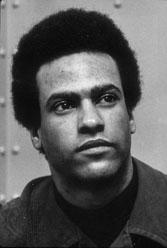
Huey P. Newton
A major source of Didion's obsession with disorder and unrest comes from the arrest of Huey Newton after he was accused of murdering a police officer, wounding one more and kidnapping a bystander. Many of his quotes seem to define the time period for Didion.
Photo: Biography.com
What Are Master-pieces and Why Are There So Few of Them
The essay was written by Gertrude Stein who was an American author and poet, as well as a major art collector. The essay was written in 1935 and then delivered as a speech at Oxford and Cambridge in 1936. The audience for whom she wrote the essay seems to be a well-educated group of people who may write or do other forms of creative expression often, as shown through certain statements Stein makes. For example she writes, "Any of you when you write you try to remember what you are about to write and you will see immediately how lifeless the writing becomes that is why expository writing is so dull because it is all remembered." Throughout this barely-punctuated and hard-to-understand essay, Stein attempts to define what exactly master-pieces are, why there are so few of them, and why people are often mistaken in describing something as a master-piece. She argues, "You may say after all there are a good many of them but in any kind of proportion with everything that anybody who does anything is doing there are really very few of them." In addition, Stein goes on to explain what makes something not a master-piece. She writes, "Therefore a master-piece has essentially not to be necessary, it has to be that is it has to exist but it does not have to be necessary it is not in response to necessity as action is because the minute it is necessary it has in it no possibility of going on." Throughout the rest of the essay, Stein explains that master-pieces must be unrelated to time, as well as unrelated to identity. This abstract matter, and the way the essay is written, makes Stein's ideas difficult to understand. The syntax she uses is that of very long and run-on sentences that repeat ideas and words frequently. Many times Stein will write almost identical sentences only a few paragraphs later. While the reader certainly does get a better understanding of what master-pieces are, and the way Stein defines them in her own life, the essay itself makes her ideas difficult to understand.
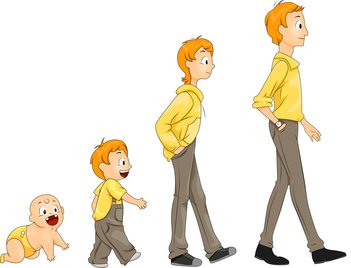
Boy to Man
In her essay, Stein highlights the idea of humans not being master-pieces because a boy is first a boy before he becomes a man, and the process involves time as well as identity.
Photo: LifeStages Center
Subscribe to:
Posts (Atom)