After the recent shooting at a health center in San Bernardino, California, there has been much speculation about who the shooters were, what their intentions were, and how they were able to carry out the kind of attack they did. While the FBI does possess one of the shooter's phones, they cannot unlock it due to a password, as well as the privacy rights guaranteed by Apple, the maker of the phone. The US government is now asking Apple to create and install a software that would allow the phone to be unlocked, in order for more information to be discovered about the shooting, and the shooters themselves. While privacy is certainly a right that should be guaranteed to all citizens, when national security is at stake, companies should have an obligation to work with the government.
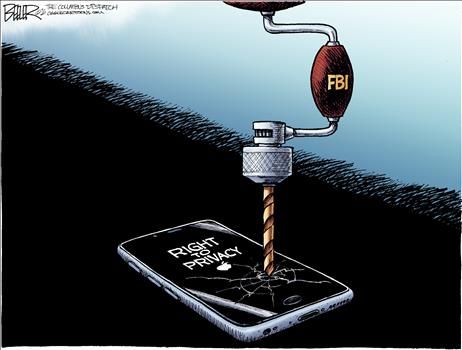
The political cartoon depicts the FBI putting a screw into an iPhone which reads, "Right to Privacy". The cartoon is arguing that the FBI is hurting the policies that Apple holds to be true with their intent on discovering what secrets the phone holds. Due to incidents in the past with national security, such as those brought up by Edward Snowden, Apple is standing firm on their policies. Their main concern is that with the development of a software that can unlock the phone, this software could be stolen in the future and used to unlock any iPhone that exists. While this is certainly a legitimate concern, it would seem that Apple technicians are specialized so completely and dominantly for their market, that they should be able to work around this issue when it comes to such a big problem as national security.
The incident in San Bernardino and the events that have followed it have upset many people on both sides of the issue. The entire country felt the effects of the shooting and the mourning that followed. Those that are worried about their privacy have valid concerns, however, sometimes the safety and well-being of the country must come before the individual. We must put our trust in Apple and believe that they will be able to work through this problem without risking our national security.

No comments:
Post a Comment